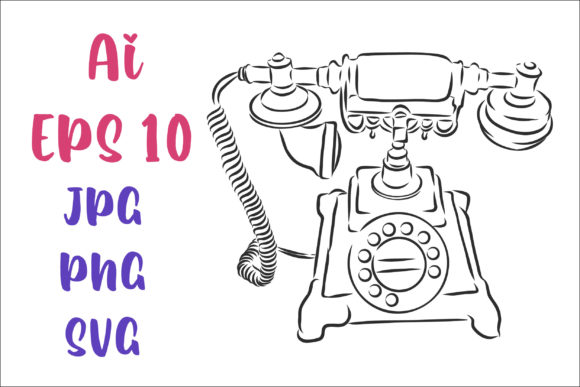
Retro Phone Vector Sketch Review
When I first opened the Retro Phone Vector Sketch, my immediate thought wasn't about the file formats or the technical specs. It was about the vibe. There is a specific nostalgia that hits you when you see a hand-drawn sketch of an old-school mobile phone, and this design captures it perfectly. As someone who has spent years turning digital assets into stitched reality for clients and my own shop, I know that a pretty image on a screen doesn't always translate well to thread. This review is about taking a hard look at how this illustration actually performs when it leaves the computer and lands on fabric.
The First Stitch: Visual Personality and Mood
The Retro Phone Vector Sketch brings a playful, vintage energy to any project. Unlike rigid, geometric vector art, the sketch style implies movement and human touch. It feels like something you would doodle in a notebook while waiting for coffee, which makes it incredibly approachable for handmade products. The lines are loose enough to suggest a casual aesthetic but structured enough to hold up under the tension of embroidery stitches.
In terms of layout, the design strikes a balance between detail and simplicity. It isn't so cluttered that it will blur into a blob of color, nor is it so sparse that it looks unfinished. For a small business owner or an Etsy seller, this kind of visual personality is gold. It fits naturally into themes of "vintage tech," "nostalgia," or "modern retro." Whether you are creating a gift for a tech enthusiast who loves the 90s or a fun addition to a minimalist tote bag, the mood is right. It screams creativity without trying too hard.
Real-World Application: From Screen to Fabric
Let's talk about a real scenario. Imagine you are prepping for a holiday craft fair and you need a unique item that stands out on a crowded table. You decide to create custom embroidered patches or decorate canvas tote bags with a nostalgic twist. The Retro Phone Vector Sketch becomes the centerpiece of this collection.
I ran this design through my workflow for a potential sweatshirt embroidery project. The sketch style translates beautifully to satin stitch, which gives the outline a smooth, glossy finish that mimics the ink stroke of the original drawing. When I placed it on a dark navy hoodie, the contrast was striking. The design didn't get lost; instead, it popped with a graphic quality that felt professional and intentional. It works equally well on light-colored aprons for a kitchen-themed boutique or as a decorative accent on baby clothes, adding a whimsical touch to nursery decor.
For those selling digital product previews, this design is versatile. You can use the high-resolution JPG files to create printable mockups that show customers exactly how the finished product will look. The transparency in the PNG files allows for easy layering over different garment colors in your marketing materials, making your listings look polished and trustworthy.
Where to Be Cautious: Limitations and Challenges
While the Retro Phone Vector Sketch is a strong candidate for many projects, an experienced designer knows that not every design is suitable for every surface. If you are working with small hoop sizes, you need to be careful. The sketch might have fine details in the corners or thin lines that could disappear if the digitization isn't precise. Always check the stitch density before committing to a run.
Textured fabrics present another challenge. If you try to embroider this on a heavy, nubby wool or a very stretchy jersey knit without proper stabilization, the sketch lines might warp. The curved surfaces of caps or hats require special attention; the distortion inherent in stitching on a curve can sometimes flatten the artistic intent of a sketch. In these cases, the design might look best as a simple applique design where the fabric shape defines the form rather than relying solely on thread.
Dark fabrics can also be tricky depending on the thread colors you choose. If the sketch relies on subtle line work, using a dark background without a contrasting underlay or bright thread could make the design look muddy. For products that need frequent washing, like kitchen towels or baby items, ensure that the fill stitch areas are dense enough to withstand friction, or the design may fade quickly.
Impact on Brand and Customer Trust
The way a design stitches affects more than just aesthetics; it impacts customer trust and perceived value. A clean, well-executed Retro Phone Vector Sketch signals professionalism. It tells the buyer that you care about the details. On the other hand, a poorly executed version with skipped stitches or frayed edges can make a handmade product feel cheap, regardless of the price point.
This design has the potential to boost engagement because it taps into a shared cultural memory. Customers love seeing familiar objects reimagined in a new medium. When you sell a personalized gift featuring this sketch, the emotional connection is stronger than with generic floral patterns. It sparks conversation. "Oh, I remember having one of those!" is a common reaction, which helps drive sales and builds brand loyalty for your craft business.
Practical Designer Notes for Success
If you are planning to use this Illustration in your commercial embroidery projects, here are a few critical steps to ensure success:
- Test on Scrap Fabric: Never go straight to the final product. Run a test on scrap material to see how the thread interacts with the fabric grain and texture.
- Check Thread Colors: The sketch relies on line definition. Ensure your thread colors offer enough contrast against the background fabric to maintain clarity.
- Review Stitch Density: Look closely at the digitized file. Are there areas where the fill stitch is too dense? Too much density can cause puckering, especially on lightweight fabrics.
- Confirm Hoop Size: Make sure the design dimensions fit your intended hoop size without cutting off important details.
- Inspect Small Details: Zoom in on the vector source files (Ai, EPS 10) to see if any tiny lines are too thin to stitch effectively. You may need to adjust them manually.
- Stabilizer Selection: Use the correct stabilizer for your fabric type. Cut-away stabilizers are often best for maintaining the integrity of the sketch lines on stretchy materials.
- Licensing Check: Before selling finished items or including this in a digital product bundle, double-check the licensing terms to ensure you have the rights for commercial use.
The Retro Phone Vector Sketch is more than just a graphic; it is a tool for storytelling. Whether you are an Etsy seller looking to expand your catalog or a hobbyist making a gift for a friend, this design offers a solid foundation for a high-quality finished product. By paying attention to the nuances of fabric, thread, and machine settings, you can turn this simple sketch into a standout piece that delights your audience.
Ultimately, the success of any embroidery file comes down to preparation. Take the time to understand the limitations of the design, respect the properties of the fabric, and let your creative vision guide the process. With the right approach, the Retro Phone Vector Sketch can become a staple in your collection of design assets, ready to bring a touch of retro charm to any embroidery project.